StatCounter

Wednesday, September 28, 2011

We have a Winner!

Thanks so much to all who purchased raffle tickets for my Helping Hand Pendant. I'm so pleased to announce that we raised $1940 and I'm going to make it an even $2000 and send it to the Craft Emergency Relief Fund [CERF]). All the proceeds will directly benefit Vermont craftspeople hurt by Hurricane Irene.
And the winner is...............Terry Palmer of Lafayette, LA.

Congratulations Terry and to everyone for giving a helping hand!

Monday, September 12, 2011

Helping Hand Pendant Raffle to Benefit Vermont Flood Victims

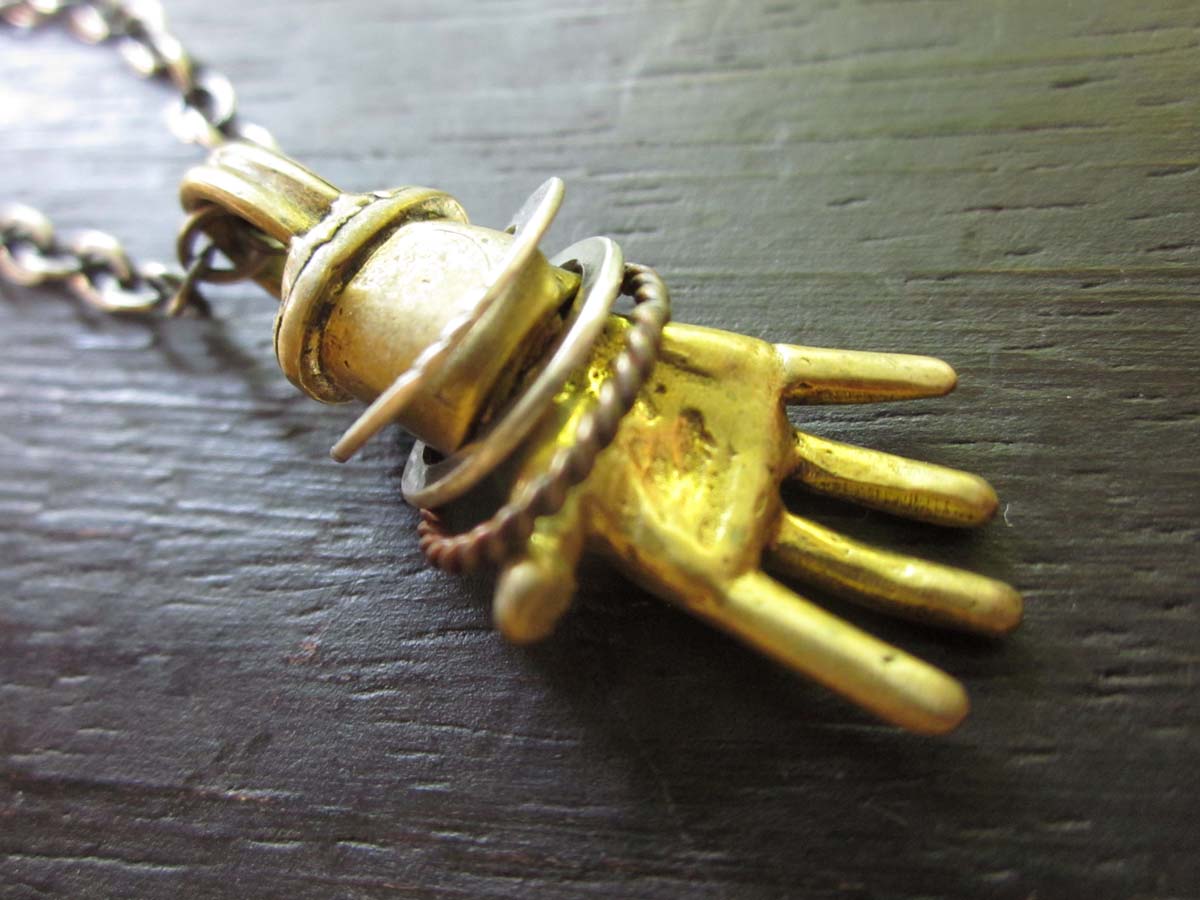
Hurricane Irene's flood waters devastated vermont on August 28th. My own town in Central Vermont was particularly hard hit. My family's farm is high on a hill and we were not effected but many of our neighbors lost everything. I'm raffling off this "Helping Hand" pendant hoping to help in a small way.
This sculpted brass hand is very gestural. It features 2 hammered sterling bracelets and 1 made of twisted red brass. It hangs on an 18" sterling chain with a handmade sterling s-hook. The hand is 1 3/8" long.
The pendant's value is $150.
All proceeds will directly benefit Vermont craftspeople hurt by Hurricane Irene (through the Craft Emergency Relief Fund [CERF]).
First pay using the Paypal button below. As soon as you do, your name will be put in a hat.The winner will be drawn on September 28th (that date will mark 1 month since Irene). The winner's name will be announced on my blog and the piece will be mailed that day.
You can choose 1 ticket for $10 or 3 tickets for $25


Thursday, August 11, 2011

Branching Out

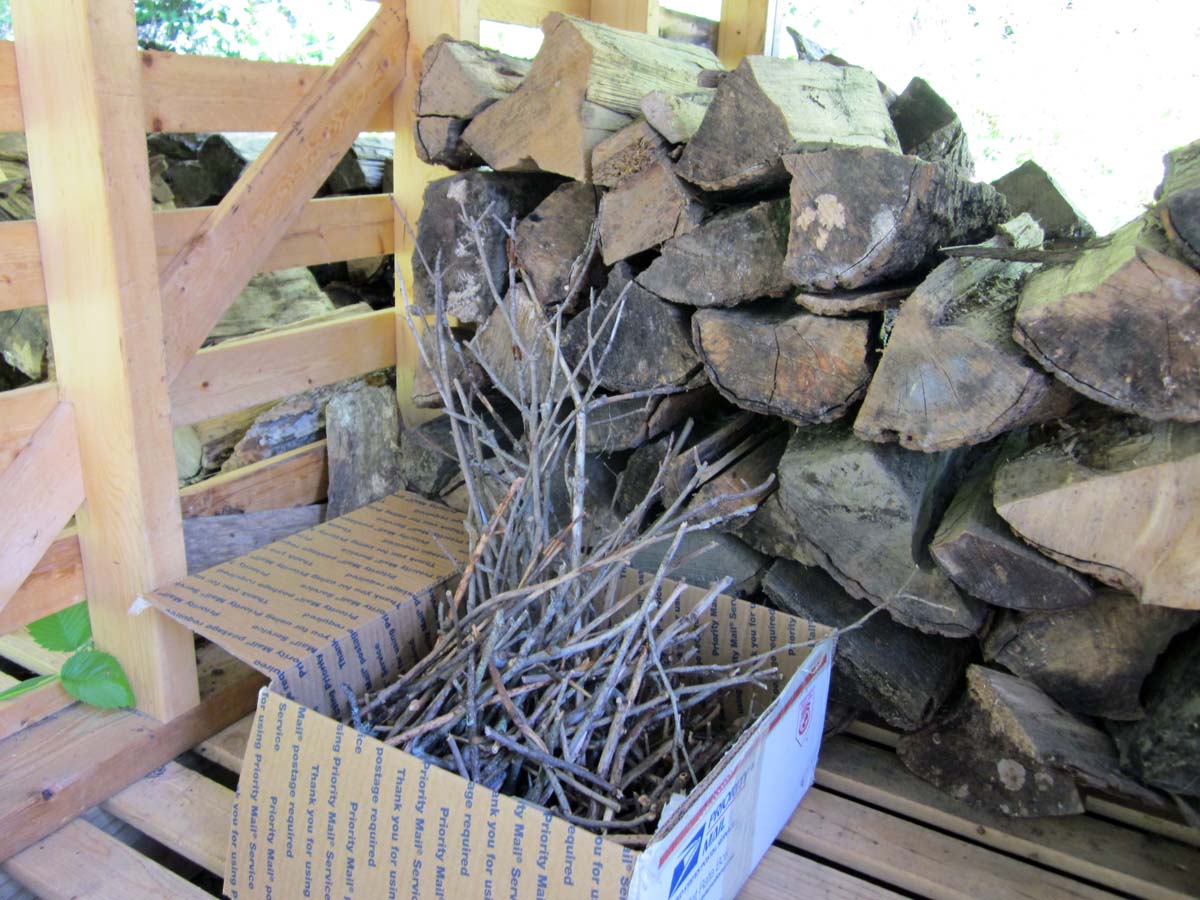
I began collecting sticks when I first started walking in the woods, many decades ago here in Vermont. Piles of them wait, in all their twisted fancy, in boxes in my wood shed, precariously poised between craft and kindling.
But many perfect little exemplars have found places among the jewels and junk collected on my countertops; on their own, adorning other found objects, or sprouting bits and bobs of metal and metal clay.
The little stick that found its way onto the Treasures Bracelet was collected years ago and patiently stored against the day it would meet opportunity in my work. It was there, beckoning, when I was working to finish the Treasures Bracelet class sample last spring. At first just another charm, later I saw it as one of several alternative materials that would enable me to use less precious silver.
I set the twig idea aside to work on the toggle ideas for that class knowing that between the spring classes in June and the upcoming fall classes in September, I'd have a chance to go back to the twigs. But practicality aside, the twig, and the idea of using twigs embellished with all kinds of things, became irrisistable.

Because I'm using liquid polymer, which tends to drool a bit in the oven, they can't bake flat, so I've made this wire tree for baking.
Although they are lovely, gestural expressions by themselves, just as I find them, I cannot resist the urge to alter what I find: I've scraped, painted, gilded, gouged, carved, capped, beaded, and bound the twigs. I've added silver, gold, paint, paper, thread, and polymer clay. The twigs are a starting point, each pointing in a slightly different direction. Imposing my creative process on them doesn't make them any less essentially wood, wild or twig. It doesn't make them less what they are, it just adds some of me into the mix while also providing the practical means to get them onto the body as adornments.


Tuesday, August 2, 2011

More Toggle Designs

I've been working on some new designs for my upcoming Treasures Bracelet Class.
This one is made by rolling fresh PMC onto a carved polymer texture plate. I like the way a small detail taken from the texture plate becomes a whole, more than the sum of it's parts.

This toggle is made by carving directly in the dry PMC. I rolled out clay to 5 cards, cut out my shapes, dried and lightly sanded them. I used a 1.5 mm U gauge (micro carving tool) to carve the design onto both sides (all the carving scraps are reconstituted). The toggle pieces were fired flat on a kiln shelf and curved on a ring mandrel after firing.


There are still some spots remaining in the Class!

Thursday, July 14, 2011

Wednesday, May 11, 2011

Gravity, Gravitas: The Weight of Silver

I'm not going to write about the high cost of silver because everyone is doing that and nobody really knows what's what and I certainly don't have a clue. But I would like to describe my personal response to this meteoric leap in cost.

First, I wrote students in my upcoming classes to say I wouldn't be selling PMC in my classes. Figuring out when to buy clay and how to price it is beyond what I want to do. Second, I sold my scrap silver and that made me feel A LOT better about the price of silver. I suffer no qualms of contradiction for celebrating the price I'm getting for my scrap on the one hand, and carping about the cost I'm paying for silver on the other.

But here's the real response I want to describe:
The cost of silver was worming its way into my studio life. It was inhibiting my work; there was a big green dollar sign hovering just under my desk light, over my desk whenever I sat down to work. It was off putting and fast becoming a serious deterrent to rolling out clay. Then I started thinking about it in a different way; as a call to action of sorts. After all, I do use other materials in addition to PMC; why not take this as a challenge and let the other materials do the heavy lifting? The silver is not diminished by being lessened. Rather, it's celebrated. Cherished.

For many years I've made this toggle clasp (Ouroboros, pictured below) out of carved solid snakes of PMC.

It's heavy, very heavy. It uses a lot of precious metal clay. So, last week I remade it out of polymer then embellished it with little bits of PMC.

As soon as I finished it I began to see other ways I could have accomplished the goal of using silver less automatically, and other toggles I could make. Now I have many ideas I intend to pursue, all of which serve the dual purpose of nourishing my creativity (I love a challenge) and saving my precious silver.

Above is a photo of polymer toggles in process.

Above shows a carved PMC toggle
ring and carved wood sticks that have been rubbed with paint and will be embellished with silver and fashioned into toggle bars.

Many years ago, when I first discovered these materials, adding metal to polymer was my starting point. I loved polymer clay but until I began mixing metal with it in the early nineties, it lacked something, for me anyway: it lacked gravity; it lacked gravitas.

A little PMC goes a long way to enhancing polymer. It adds weight, which in my opinion the polymer needs, it adds dynamism, it adds value. I love the way the combination looks and feels.
But there are so many other materials that are so enhanced by that dash of silver; wood, rusty metal and old tin, broom straw, etc.

Although I made these sample toggles for my upcoming Treasures Bracelet class, all of my upcoming classes incorporate polymer to some degree. Because silver prices are a concern to anyone likely to come to my classes, I expect these ideas will find an enthusiastic home among my students, and although I won't actually get into my studio to pursue these ideas myself until July, I will have the opportunity to talk about them with the creative crowd in my classroom.

Class Rescheduled: PMC Pendant with New Polymer Inlay Techniques

at the Baltimore Bead Society

4 Day Class - October 29th - November 1st


First create your own, unique textures for metal clay from black and white images using the tear away technique. Then, using these textures, design and construct a beautiful seamless PMC pendant using techniques developed by Celie. After firing and finishing the pendant, you’ll use tear away paper to roll print an image onto colored, collaged sheets of polymer clay. Then you'll transform these with paint, pastel, oil crayon and colored pencil into brilliant miniature tapestries. Finally, size and set your polymer image in your PMC pendant using rudimentary metalsmithing techniques including riveting, hammering, and patinas. Finish your pendant with a sterling chain and decorative dangles.

For more information and to register contact:

Terri Wright at terriwright@comcast.net